Yellow Heart Emoji Meaning: What It Really Means and How to Respond
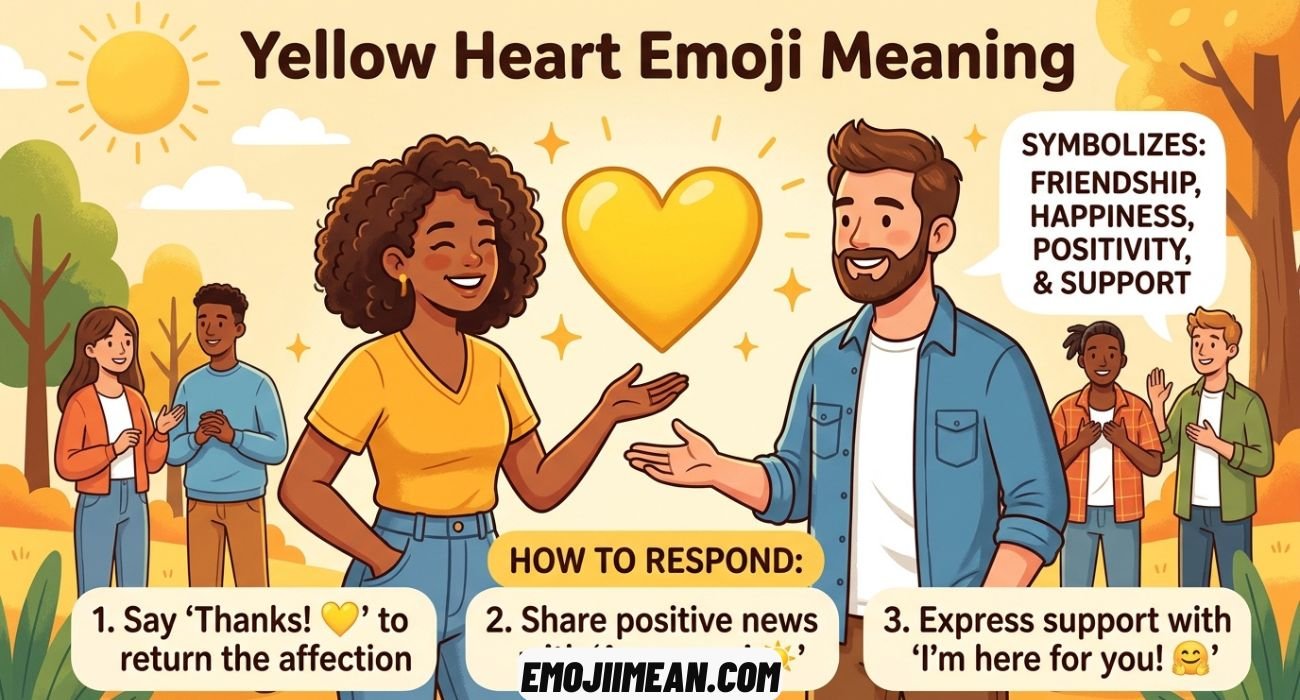
The Yellow Heart Emoji (💛) shows friendship, kindness, and happiness. It expresses warm feelings without strong romance. People use it to show care, support, and appreciation in everyday messages.
The 💛 emoji can mean different things in different chats. Its meaning changes with the relationship and the conversation. Learning its meaning helps you avoid confusion and reply the right way.
The Yellow Heart Emoji Meaning often represents trust, loyalty, and positive emotions. Friends, family, and coworkers use it to share encouragement and gratitude. Knowing when and how to use it makes your messages more friendly and meaningful.
What Does the Yellow Heart Emoji Mean?

The Yellow Heart Emoji Meaning is closely connected to friendship, positivity, trust, and emotional warmth. It is one of the most cheerful emojis in the heart emoji collection because the color yellow is widely associated with sunshine, happiness, optimism, and hope.
People often use the 💛 emoji when they want to express affection without implying romantic feelings. It works well in everyday conversations, making it one of the safest heart emojis to send to friends, classmates, coworkers, or family members.
Unlike the ❤️ red heart, which often symbolizes deep love or romance, the 💛 yellow heart focuses more on appreciation, encouragement, and genuine connection.
The Basic Meaning of the Yellow Heart Emoji
At its core, the 💛 emoji represents:
- Friendship
- Kindness
- Happiness
- Support
- Loyalty
- Optimism
- Trust
- Gratitude
For example:
Friend: “Thanks for always being there for me. 💛”
The emoji reinforces the message by adding warmth and sincerity without sounding romantic.
Another example:
Coworker: “Great job on today’s presentation! 💛”
Here, the emoji simply shows appreciation and encouragement.
Why Color Matters in Heart Emojis
Every colored heart carries a slightly different emotional meaning.
Yellow has long been associated with:
- Joy
- Positive energy
- Friendship
- Hope
- Sunshine
- Cheerfulness
That is why many people choose the 💛 emoji instead of ❤️ when they want to keep their message warm but not overly romantic.
For example:
❤️ = “I love you.”
💛 = “I care about you.”
Although both express affection, the emotional intensity is different.
The Symbolism of the Yellow Heart Emoji
The Yellow Heart Emoji Meaning goes beyond simple friendship. It represents emotional comfort, sincere appreciation, and a positive attitude toward others. Because of its bright color, it often communicates happiness and encouragement even without words.
Unlike some emojis that can be interpreted in several ways, the yellow heart usually carries a positive and uplifting message.
Friendship and Positivity
The most recognized meaning of the 💛 emoji is friendship.
Best friends frequently exchange yellow hearts because they symbolize trust, loyalty, and years of shared experiences.
For example:
“Good luck on your exam! You’ve got this! 💛”
Here, the emoji shows encouragement rather than romance.
Another example:
“Miss hanging out with you! 💛”
This communicates affection while keeping the relationship friendly.
The yellow heart is especially popular among:
- Close friends
- School classmates
- College roommates
- Online gaming friends
- Social media communities
It creates an atmosphere of positivity and emotional support.
Joy and Happiness
The yellow heart also represents celebration and happiness.
People often include it when sharing exciting news, congratulating someone, or celebrating achievements.
Examples include:
- “Congratulations on your new job! 💛”
- “Happy Birthday! Hope you have an amazing day! 💛”
- “You did it! So proud of you! 💛”
In each case, the emoji adds warmth and excitement.
Loyalty and Trust
Many long-term friendships are built on trust.
The yellow heart has gradually become a symbol of dependable relationships.
Someone may send it after saying:
“Thanks for always listening.”
or
“I know I can count on you. 💛”
Here, the emoji strengthens the emotional meaning of the message.
A Symbol of Pure Intent
One reason the yellow heart has become so popular is that it feels genuine. Unlike romantic emojis that may send mixed signals, the 💛 emoji usually reflects honest, uncomplicated emotions.
It tells the other person:
“I appreciate you.”
“I’m thinking about you.”
“I’m happy you’re in my life.”
without suggesting romance.
Genuine Care Without Romance
Many people hesitate before sending a red heart because they worry it could be misunderstood.
The yellow heart solves that problem.
It allows people to express care while maintaining clear boundaries.
For example, if a coworker helps you finish a project, replying with:
“Thank you so much! 💛”
feels warm and appreciative without becoming personal.
This makes the yellow heart one of the safest emojis for everyday conversations.
Emotional Warmth
Digital conversations often lack facial expressions and tone of voice.
Emojis help fill that gap.
The 💛 emoji softens messages and makes them feel more sincere.
Compare these two texts:
“Thanks.”
“Thanks 💛”
The second feels noticeably warmer and more genuine.
That small emoji can completely change the emotional tone.
Innocence and Kindness
The yellow heart is also associated with innocence and kindness.
Many creators, influencers, teachers, and nonprofit organizations use it because it reflects positivity rather than passion.
It is commonly seen in messages like:
- “Stay positive! 💛”
- “Be kind to yourself today. 💛”
- “Sending good vibes! 💛”
The emoji creates a welcoming and supportive atmosphere.
Cultural Perceptions
Although the Yellow Heart Emoji Meaning remains fairly consistent worldwide, different cultures and online communities sometimes interpret it differently.
Understanding these cultural nuances helps avoid misunderstandings.
Meaning in the United States
In the United States, the 💛 emoji most commonly represents:
- Friendship
- Appreciation
- Positivity
- Encouragement
- Emotional support
It is frequently used on:
- Snapchat
- TikTok
- iMessage
Americans often use it between friends instead of the red heart because it feels more casual.
For example:
“Hope you have an awesome weekend! 💛”
This sounds friendly and caring without implying romantic interest.
Meaning Across Different Countries
While the core meaning stays similar, local culture can influence how people use the emoji.
In some places, yellow symbolizes happiness and prosperity.
Elsewhere, it may represent hope, new beginnings, or positive energy.
However, because emojis are now part of global internet culture, the 💛 emoji has become widely recognized as a sign of friendship and kindness across many countries.
Does Culture Change Emoji Meanings?
Sometimes.
The biggest factor is not culture but context.
For example, if your best friend sends:
“Love you! 💛”
it likely expresses friendship.
If someone you’ve been dating sends:
“Thinking about you 💛”
the message may carry deeper emotional significance depending on your relationship.
Always consider:
- Who sent the emoji.
- What they wrote with it.
- Your relationship.
- Previous conversations.
Looking at the full context is much more reliable than judging the emoji alone.
Real-World Examples: How People Use the Yellow Heart

The best way to understand the Yellow Heart Emoji Meaning is by seeing how people use it in everyday conversations. While the emoji almost always conveys warmth and positivity, its exact meaning changes depending on the relationship between the sender and the recipient.
In real life, the 💛 emoji appears in text messages, social media comments, birthday wishes, work chats, and family conversations because it expresses affection without sounding overly romantic.
Real-World Examples: How People Use the Yellow Heart
Seeing the Yellow Heart Emoji Meaning in action makes it much easier to understand. The same emoji can express friendship, appreciation, encouragement, or gentle affection depending on the conversation. The key is to look at the words that come with the emoji and the relationship you have with the sender.
Between Best Friends
Among best friends, the 💛 emoji is almost like a digital hug. It celebrates loyalty, trust, and years of shared memories. Many friends use it every day without giving it a second thought because it feels natural and comforting.
Example 1:
Emma: “Thanks for always listening to me. 💛”
Sophia: “Always! You know I’ve got your back. 😊💛”
In this conversation, the yellow heart reinforces friendship and emotional support.
Example 2:
Jake: “Can’t wait for our road trip this weekend! 💛”
Liam: “Same here! It’s going to be awesome.”
Here, the emoji simply adds excitement and warmth.
Family Conversations
Family members often use the 💛 emoji to express love in a gentle, caring way. Parents, siblings, grandparents, and cousins may choose it because it feels wholesome and comforting.
Examples include:
- “Drive safely. Love you! 💛”
- “Dinner is ready whenever you get home. 💛”
- “Good luck on your interview today! 💛”
The emoji reminds the recipient that someone is thinking about them.
Social Media Comments
On platforms like Instagram, TikTok, and Facebook, the yellow heart is frequently used to spread positivity.
Examples:
- “You look amazing! 💛”
- “This made my day. 💛”
- “Keep inspiring people! 💛”
- “Beautiful photo! 💛✨”
Content creators often receive hundreds of yellow hearts because followers want to show appreciation without making the interaction seem romantic.
Workplace Messages
Although emojis should be used carefully in professional settings, the yellow heart is one of the safest heart emojis for casual workplace communication.
For example:
“Thanks for covering my meeting today. 💛”
or
“Excellent teamwork this week! 💛”
In these cases, the emoji communicates gratitude and encouragement while remaining respectful.
School and College Friends
Students regularly use the yellow heart when encouraging classmates before exams or celebrating achievements.
Examples:
- “Good luck on your finals! 💛”
- “We survived another semester! 💛”
- “Proud of you for graduating! 🎓💛”
These messages create a sense of community and support.
Community Support
Many charities, volunteer groups, and online communities use the yellow heart because it represents hope and kindness.
You’ll often see messages like:
- “Thank you for your donation. 💛”
- “Together we can make a difference. 💛”
- “Be kind to everyone today. 💛”
The emoji reinforces compassion and positive action.
See Also : Orange Heart Emoji Meaning and How to Respond to It
How to Respond to a Yellow Heart Emoji

Knowing the Yellow Heart Emoji Meaning is helpful, but knowing how to respond is just as important. A thoughtful reply keeps the conversation flowing and prevents misunderstandings.
There is no single “correct” response. The best reply depends on who sent the emoji and what they meant by it.
Understanding the Sender’s Intent
Before replying, ask yourself a few simple questions:
- Is this person a close friend?
- Are they a family member?
- Could they be flirting?
- Is this a work-related conversation?
- What was the topic before they sent the emoji?
The answers will help you choose the most appropriate response.
For example:
Message:
“Thanks for always supporting me. 💛”
A suitable reply could be:
“Anytime! I’m always here for you. 😊”
This matches the warm and supportive tone.
Match Their Energy
A good rule is to match the sender’s emotional energy.
If they send one yellow heart, you don’t need to reply with several romantic emojis.
Instead, choose something that feels natural.
Examples include:
- 💛
- 😊
- 🤗
- ✨
- 🙌
Or simply write:
“You’re welcome! 💛”
Matching their tone makes conversations feel comfortable and genuine.
1. If It’s From a Friend
The most common situation is receiving a yellow heart from a friend. In most cases, it simply means they appreciate you and enjoy your friendship.
There’s no hidden message—you can respond naturally.
Best Responses
Here are some friendly replies:
- “Thanks! 💛”
- “You’re the best too! 💛”
- “Always happy to help. 😊”
- “Aww, thank you! 💛”
- “Right back at you! 💛”
These responses acknowledge the gesture without changing the meaning of the conversation.
Funny Replies
If your friendship is playful, humor works well.
Examples:
- “You’re getting one yellow heart… don’t get greedy. 😂💛”
- “Friendship level unlocked! 💛😎”
- “Now you owe me pizza. 🍕💛”
- “This heart deserves snacks. 💛😂”
Lighthearted replies strengthen friendships and keep conversations fun.
Appreciative Replies
Sometimes a sincere response is the best option.
Examples:
- “That means a lot to me. 💛”
- “I’m lucky to have a friend like you.”
- “Thank you for always being there.”
These replies deepen trust and appreciation.
If It’s From a Romantic Interest
When someone you’re interested in sends a 💛 emoji, it’s natural to wonder whether they’re flirting.
The answer depends on the overall conversation.
What It Usually Means
A yellow heart from a romantic interest may indicate:
- They’re comfortable with you.
- They enjoy talking to you.
- They’re building trust first.
- They’re expressing affection without rushing into romance.
Unlike the ❤️ red heart, the 💛 emoji often represents the early stages of emotional connection.
For example:
“Hope your day goes well! 💛”
This shows kindness and genuine care but doesn’t necessarily confirm romantic feelings.
Signs It Could Be More Than Friendship
Pay attention to the bigger picture.
A yellow heart may suggest romantic interest if the person also:
- Texts you every day.
- Starts conversations first.
- Compliments you often.
- Makes time to see you.
- Uses other affectionate emojis like 🥰 or 😊.
- Remembers small details about your life.
The emoji alone isn’t enough to determine someone’s feelings.
How to Respond
If you’re interested too, you can reply warmly without rushing things.
Examples:
- “Thanks! Hope you have a great day too. 💛”
- “That’s really sweet of you. 😊💛”
- “You’re always so thoughtful.”
As your relationship develops, your emoji choices may naturally change over time.
If you’re unsure about their intentions, it’s perfectly fine to keep your replies friendly until you understand the situation better.
If It’s From Family or Colleagues
The Yellow Heart Emoji Meaning changes slightly when it comes from family members or coworkers. In these situations, the emoji usually expresses appreciation, kindness, encouragement, or emotional support rather than romance.
Understanding the relationship helps you interpret the emoji correctly and respond in a way that feels natural.
Family Meaning
Family members often use the 💛 emoji to remind one another that they care. Parents may send it before an important exam, siblings might use it after sharing good news, and grandparents may include it in loving messages.
For example:
Mom: “Don’t forget to eat lunch today. 💛”
This isn’t just a reminder—it also expresses care and affection.
Another example:
Brother: “Congratulations on your promotion! So proud of you. 💛”
Here, the emoji celebrates your success while showing genuine support.
The yellow heart feels warm, comforting, and sincere, making it perfect for family conversations.
Workplace Meaning
In professional settings, emojis should be used thoughtfully. However, the 💛 emoji has become increasingly common in casual workplace chats, especially among close teams.
A manager might write:
“Fantastic work on the project! 💛”
A teammate may say:
“Thanks for helping me today. Couldn’t have done it without you! 💛”
In both cases, the emoji communicates appreciation and encouragement without crossing professional boundaries.
When Is It Appropriate at Work?
Using the yellow heart can be appropriate when:
- Celebrating a team achievement.
- Thanking a coworker.
- Welcoming a new employee.
- Congratulating someone on a promotion.
- Offering encouragement during a busy week.
However, avoid using it in highly formal emails, legal communications, or conversations with people who may not be comfortable with emojis.
Appropriate Responses
Your response should match the tone of the original message.
For family:
- “Love you too! 💛”
- “Thank you! That means a lot.”
- “I appreciate everything you do.”
For coworkers:
- “Thanks! I really appreciate your support.”
- “Couldn’t have done it without the team.”
- “You’re welcome! Happy to help. 😊”
Simple, genuine replies are often the most effective.
See Also : What Does a Green Heart Emoji
If It’s From Someone You Like
Receiving a 💛 emoji from someone you have feelings for can be exciting—and a little confusing. Many people immediately wonder whether it signals friendship or something more.
The truth is that context matters far more than the emoji itself.
Should You Read Into It?
A single yellow heart doesn’t automatically mean someone is flirting. Many people use it naturally with friends, classmates, coworkers, and family.
Instead of focusing only on the emoji, pay attention to the person’s overall behavior.
Ask yourself:
- Do they message you regularly?
- Do they seem excited to talk to you?
- Do they ask personal questions?
- Do they make plans to spend time together?
If the answer is yes, the yellow heart may be one small sign of growing affection.
Signs It May Mean More
The 💛 emoji can sometimes indicate romantic interest when combined with consistent behavior.
Some common signs include:
They Text First
Someone who frequently starts conversations is usually interested in maintaining a connection.
For example:
“Good morning! Hope you slept well. 💛”
This message feels thoughtful and personal.
They Remember Small Details
If they ask about your interview, remember your favorite food, or check in after an important event, they’re showing genuine interest.
Example:
“How did your presentation go today? I’ve been thinking about it. 💛”
This demonstrates care that goes beyond casual conversation.
They Compliment You Often
Regular compliments paired with the yellow heart may suggest deeper feelings.
Examples:
- “You always know how to make people smile. 💛”
- “You looked amazing today! 💛”
While still friendly, repeated compliments can signal attraction.
They Use Other Affectionate Emojis
If the yellow heart appears alongside emojis like:
- 😊
- 🥰
- 😘
- ❤️
the emotional meaning may become stronger.
Always evaluate the entire conversation instead of focusing on a single emoji.
Safe Ways to Reply
If you also like the person, respond warmly without putting pressure on the conversation.
Examples:
“Thank you! That made me smile. 💛”
“You’re really sweet. 😊💛”
“Hope you have an amazing day too!”
These replies show appreciation while allowing the relationship to develop naturally.
If you’re unsure about their intentions, keeping your response friendly is usually the best choice.
If You Want to Keep the Vibe Friendly
Sometimes you want to show kindness without creating confusion. The yellow heart is one of the best emojis for maintaining a friendly atmosphere.
It communicates warmth while avoiding mixed signals.
Best Emojis to Send Back
If you want to keep things platonic, consider replying with:
| Emoji | Meaning |
| 💛 | Friendship and appreciation |
| 😊 | Warm happiness |
| ✨ | Positive energy |
| 🙌 | Celebration and encouragement |
| 🌞 | Cheerfulness and optimism |
| 👍 | Support and agreement |
| 🤗 | Friendly hug |
These emojis reinforce positive feelings without implying romance.
Friendly Messages
Here are a few examples you can use:
- “Hope you have an awesome day! 💛”
- “Thanks so much! 😊”
- “You’re the best!”
- “Really appreciate your help.”
- “Take care! 💛”
Each response feels warm while remaining comfortably friendly.
Avoid Sending Mixed Signals
Many misunderstandings happen because people choose the wrong emoji.
For example:
Someone sends:
“Thanks for helping me today. 💛”
Replying with:
“Love you ❤️😘”
could unintentionally change the tone of the conversation.
Instead, responding with:
“You’re welcome! 💛”
keeps the emotional balance.
When Not to Use Romantic Emojis
Avoid stronger romantic emojis if your goal is to stay friendly, such as:
- ❤️
- 💋
- 😘
- 😍
These emojis often carry romantic or flirtatious meanings and may confuse the other person.
The yellow heart, on the other hand, is a safe choice for expressing kindness, gratitude, and support without sending the wrong message.
By matching the other person’s tone and considering your relationship with them, you’ll communicate more clearly and avoid unnecessary misunderstandings.
Psychology Behind Emoji Interpretation
Understanding the Yellow Heart Emoji Meaning also involves knowing how people interpret emojis. Since text messages don’t include facial expressions or tone of voice, emojis help fill that emotional gap. Research has shown that emojis make digital conversations feel warmer, friendlier, and more personal. However, people often interpret the same emoji differently based on their experiences, age, culture, and relationship with the sender.
Why Humans Assign Meaning to Emojis
The human brain naturally looks for emotional cues during communication. In face-to-face conversations, we rely on smiles, eye contact, and body language. In digital messaging, emojis act as those emotional signals.
For example, the message “I’m proud of you” feels positive, but adding a 💛 emoji makes it feel even more sincere and heartfelt. This is why emojis have become an essential part of modern communication.
Color Psychology of Yellow
The color yellow is widely associated with happiness, optimism, friendship, creativity, and hope. These positive associations influence how people perceive the yellow heart emoji.
Because of these emotional connections, many people choose the 💛 emoji when they want to spread encouragement, celebrate success, or brighten someone’s day. Its cheerful appearance instantly creates a welcoming and uplifting feeling.
Why Emoji Meanings Can Be Misunderstood
Despite their popularity, emojis aren’t always interpreted the same way. A yellow heart sent by a close friend usually means appreciation, while the same emoji from someone you’re dating may carry a more personal meaning.
The best way to understand any emoji is to consider the conversation, your relationship with the sender, and the overall context instead of relying on the emoji alone.
See Also : Blue Heart Emoji Meaning
SEO Insights: Why People Search for Emoji Meanings

The growing popularity of emojis has also increased online searches for their meanings. Millions of people use emojis every day, but many still want to know exactly what a specific emoji represents before responding.
Searches for terms like “Yellow Heart Emoji Meaning,” “What Does the Yellow Heart Emoji Mean,” and “How to Respond to a Yellow Heart Emoji” continue to grow because users want clear answers that match real-life situations.
Common Questions People Ask
People often search for questions such as:
- What does the 💛 emoji mean from a girl?
- What does the 💛 emoji mean from a guy?
- Is the yellow heart emoji romantic?
- Should I reply with a yellow heart?
- What does the yellow heart mean on Snapchat?
These questions show that users are looking for practical advice rather than simple definitions.
Why Context Matters in Search
The meaning of an emoji can change depending on who sends it. That’s why articles that explain different situations—such as friendships, dating, family, and work—are more helpful than those offering only a one-line definition.
Providing real-world examples helps readers understand the emoji in the same way they experience it in everyday conversations.
Yellow Heart Emoji Meaning on Snapchat
On Snapchat, the Yellow Heart Emoji Meaning is different from its general texting meaning. Instead of simply representing friendship or kindness, it is part of Snapchat’s Friend Emoji system.
If you see a 💛 next to someone’s name, it means you and that person are #1 Best Friends. In other words, you send the most snaps to each other compared to anyone else on your friends list.
How to Get the Yellow Heart on Snapchat
You earn the yellow heart by consistently exchanging snaps with the same person more than anyone else.
It’s not based on text messages or chat frequency. Instead, Snapchat calculates your interaction using snap activity.
If both users continue snapping each other regularly, the friendship emoji can eventually change to a ❤️ Red Heart and later 💕 Pink Hearts, showing an even stronger friendship streak.
Does It Mean Romance?
Not necessarily.
Many people mistakenly believe the Snapchat yellow heart means two users are dating. In reality, it only reflects your activity level on the app.
Your #1 Best Friend on Snapchat could be your sibling, best friend, classmate, or partner.
Yellow Heart Emoji vs Other Heart Emojis
Although all heart emojis express affection, each color carries a unique emotional meaning. Understanding these differences helps you choose the right emoji for every conversation.
| Heart Emoji | Primary Meaning | Best Used For | Romantic? |
| 💛 Yellow Heart | Friendship, happiness, loyalty | Friends, encouragement, appreciation | Rarely |
| ❤️ Red Heart | Love, romance, deep affection | Romantic partners, close family | Yes |
| 🧡 Orange Heart | Care, warmth, comfort | Close friends and support | Sometimes |
| 💚 Green Heart | Growth, nature, health | Wellness and environmental topics | Usually No |
| 💙 Blue Heart | Trust, loyalty, stability | Friends, family, teamwork | No |
| 💜 Purple Heart | Compassion, admiration, luxury | Close friendships and fandoms | Sometimes |
| 🤍 White Heart | Pure love, peace, remembrance | Sympathy and gentle affection | No |
The Yellow Heart Emoji Meaning stands out because it balances affection with friendliness, making it one of the safest and most versatile heart emojis to use.
Common Misconceptions About the Yellow Heart Emoji
The yellow heart is often misunderstood, leading people to overanalyze a simple emoji. While it can occasionally hint at deeper feelings, most of the time it represents kindness and friendship.
Does It Always Mean Love?
No. Unlike the red heart, the yellow heart usually symbolizes appreciation, support, and positive emotions rather than romantic love.
Someone may send you a 💛 simply because they value your friendship or want to encourage you.
Is It a Flirting Emoji?
Sometimes—but not always.
Flirting depends on the conversation, not the emoji itself. If someone consistently compliments you, initiates conversations, and uses affectionate language alongside the yellow heart, it may indicate romantic interest.
On its own, however, the 💛 emoji is generally considered friendly.
Does Everyone Interpret It the Same Way?
No.
Age, culture, personality, and communication style all influence how people understand emojis. What feels romantic to one person may feel completely platonic to another.
For this reason, it’s always better to consider the entire conversation instead of assuming the emoji has one universal meaning.
Evergreen Tips for Responding
Responding to the Yellow Heart Emoji Meaning doesn’t have to be complicated. In most cases, the simplest response is also the best. The goal is to match the sender’s tone while staying true to your relationship.
Always Consider Context
Before replying, think about who sent the emoji and why. A yellow heart from your best friend carries a different meaning than one from a new acquaintance or someone you’re interested in.
Match Their Energy
If someone sends a friendly message with a single 💛, respond with similar warmth instead of dramatically increasing the emotional intensity. Matching their communication style keeps the conversation comfortable and natural.
Don’t Overanalyze One Emoji
Many people use emojis out of habit. A single yellow heart doesn’t automatically reveal someone’s feelings. Look at their overall behavior and communication patterns before drawing conclusions.
Keep Your Response Genuine
Whether you reply with another 💛, a smile 😊, or a thoughtful message, authenticity matters most. Honest communication builds stronger relationships than trying to decode every emoji.
FAQs
What does ❤ 🧡 💛 💚 💙 💜 mean?
❤️ Red Heart = Romantic love; 🧡 Orange Heart = Care and support; 💛 Yellow Heart = Friendship and happiness; 💚 Green Heart = Growth, health, or nature; 💙 Blue Heart = Trust and loyalty; 💜 Purple Heart = Compassion, admiration, or luxury.
What does 💛 mean in texting?
The 💛 yellow heart usually means friendship, kindness, appreciation, and positive feelings. It’s commonly used to show care without implying romantic love.
Is 💛 better than 💕?
Neither is better—they have different meanings. 💛 is ideal for friendship and appreciation, while 💕 represents romantic affection, love, or a growing emotional connection.
What does 💚 mean in texting?
The 💚 green heart often symbolizes growth, health, nature, wellness, or support. It can also represent friendship, environmental causes, or a love for all things green.
Conclusion
The Yellow Heart Emoji Meaning is simple and positive. It usually shows friendship, kindness, support, and happiness. People use the 💛 emoji to share warm feelings without making the message romantic. You can see it in chats with friends, family, classmates, and even coworkers. The meaning also depends on the conversation and your relationship with the sender. Looking at the full message helps you understand the emoji better.
Knowing the Yellow Heart Emoji Meaning helps you reply with confidence and avoid confusion. A friendly reply with a 💛 emoji or kind words often works well. Always match the tone of the conversation and keep your response natural. The yellow heart reminds us to spread kindness, respect, and positive feelings every day. Use it wisely to build strong connections and make your messages feel warm, friendly, and sincere.