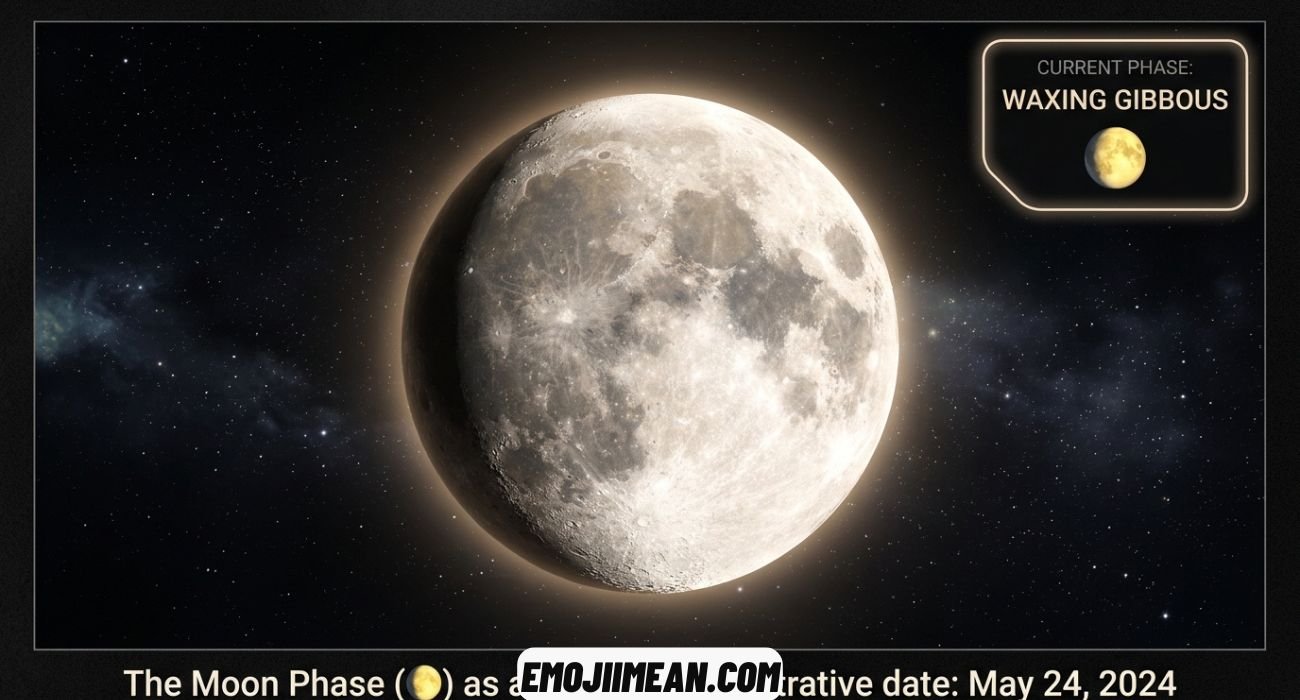
What Is the Current Phase of the Moon as an Emoji? A Complete Guide to Moon Phase Emojis
The Current Phase of the Moon as an Emoji means using the moon emoji that matches today’s real moon phase. Each emoji represents a different stage of the Moon’s lunar cycle. It helps people show the correct Moon in messages and posts.
Many people use moon emojis every day, but not everyone knows which one is correct. A small emoji can tell a bigger story about the Moon. Learning the right one is easy and fun.
The Moon changes its shape throughout the month, but moon emojis never change on their own. You need to check today’s moon phase and choose the matching emoji yourself. This guide explains everything in simple and easy English.
Understanding Moon Emojis: More Than Just Cute Icons

Moon emojis are much more than decorative symbols. They represent the different stages of the Moon’s monthly cycle and are widely used in conversations, social media posts, weather apps, and even spiritual practices.
Although many people use them simply because they look attractive, each emoji has a specific meaning based on the Moon’s appearance as it orbits Earth. Understanding these emojis can help you choose the right one for today’s lunar cycle instead of selecting one at random.
What Are Moon Emojis?
Moon emojis are digital icons included in the Unicode Standard, which ensures they appear consistently across phones, computers, and apps worldwide. While their artwork varies between platforms, their meanings remain the same.
These emojis illustrate the Moon as seen from Earth during different points of its approximately 29.5-day lunar cycle. From a completely dark New Moon to a bright Full Moon, each phase has its own emoji.
People commonly use moon emojis to:
- Talk about today’s moon phase
- Share night sky photos
- Celebrate a Full Moon
- Discuss astronomy
- Express moods or emotions
- Create aesthetic social media captions
- Mark astrology events and rituals
Because they’re easy to recognize, moon emojis have become part of everyday digital communication.
Complete List of Moon Phase Emojis
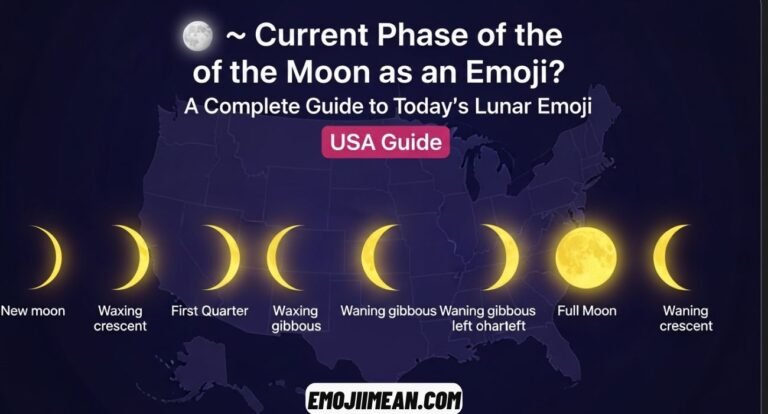
Here are the standard moon emojis and the lunar phases they represent.
| Moon Phase | Emoji | Meaning |
| New Moon | 🌑 | Moon is not illuminated from Earth’s view |
| Waxing Crescent | 🌒 | Small illuminated crescent growing larger |
| First Quarter | 🌓 | Half of the Moon is illuminated |
| Waxing Gibbous | 🌔 | More than half illuminated, moving toward Full Moon |
| Full Moon | 🌕 | Entire visible face is illuminated |
| Waning Gibbous | 🌖 | Illumination begins decreasing after Full Moon |
| Last Quarter | 🌗 | Half illuminated while shrinking |
| Waning Crescent | 🌘 | Thin crescent before the next New Moon |
| Crescent Moon | 🌙 | Decorative crescent symbol often used generally |
One important detail is that 🌙 is not an official representation of today’s moon phase. It is a general crescent moon emoji and is often used symbolically rather than scientifically.
What Each Moon Emoji Symbolizes
Beyond their scientific meanings, moon emojis have developed cultural and emotional significance.
🌑 New Moon
The New Moon represents fresh starts, new opportunities, and setting goals. Many people use it when beginning a project or starting a new chapter in life.
🌒 Waxing Crescent
This phase symbolizes growth and possibility. It’s commonly associated with building momentum and making progress.
🌓 First Quarter
The First Quarter Moon often represents decision-making, action, and overcoming challenges.
🌔 Waxing Gibbous
The waxing gibbous stage reflects preparation and refinement before reaching a major achievement.
🌕
The Full Moon is the most recognized moon emoji. It often symbolizes completion, celebration, abundance, clarity, and illumination.
🌖 Waning Gibbous
This phase encourages gratitude, sharing knowledge, and reflecting on accomplishments.
🌗 Last Quarter
The Last Quarter Moon represents evaluation, letting go, and making important adjustments.
🌘 Waning Crescent
Often associated with rest, healing, and preparing for a fresh cycle.
🌙 Crescent Moon
Unlike the scientific phases above, the crescent moon emoji is widely used as a symbol of nighttime, dreams, sleep, magic, or peace.
Why People Search for the Current Moon Emoji
Searches for what is the current phase of the moon as an emoji have increased because people want quick and visual ways to represent today’s Moon.
Some common reasons include:
- Posting the correct emoji in social media updates.
- Matching today’s lunar calendar.
- Tracking the Moon for stargazing.
- Using moon emojis in journaling.
- Following astrology or moon rituals.
- Teaching children about the Moon’s changing appearance.
For many users, selecting the right emoji is a fun way to connect with nature while adding personality to online conversations.
Do Moon Emojis Match the Real Moon Phase?

One of the biggest misconceptions is that moon emojis automatically display the current Moon outside your window. They don’t.
The Short Answer
No.
Moon emojis are static digital icons. They never change based on today’s date, your location, or the actual position of the Moon.
If today is a Waxing Gibbous, your phone won’t automatically replace 🌑 or 🌕 with the correct symbol. You have to choose the appropriate emoji yourself.
This is an important distinction because many people confuse moon emojis with live moon phase trackers found in weather apps or astronomy websites.
Why Many People Think They Do
The confusion is understandable because modern smartphones display real-time moon information in several places.
For example, many weather apps show:
- Today’s Moon phase
- Moonrise time
- Moonset time
- Percentage of illumination
Since these features appear alongside moon icons, users often assume the emoji itself updates automatically. In reality, the app is displaying separate astronomical data while the emoji remains unchanged.
Similarly, calendar apps, astrology apps, and smartwatch widgets may show today’s Moon using custom graphics rather than standard emojis.
Difference Between Moon Emojis and Live Moon Tracking
The following comparison makes the difference clear:
| Feature | Moon Emoji | Live Moon Phase Tracker |
| Updates automatically | ❌ No | ✅ Yes |
| Based on today’s date | ❌ No | ✅ Yes |
| Uses astronomical calculations | ❌ No | ✅ Yes |
| Available in messaging apps | ✅ Yes | ❌ Usually No |
| Best for decoration | ✅ Yes | ❌ No |
| Best for accurate moon information | ❌ No | ✅ Yes |
If your goal is simply to decorate a message or celebrate a Full Moon, an emoji works perfectly.
However, if you need accurate information about today’s current lunar phase, always rely on a trusted moon phase calendar, astronomy app, or weather service that calculates the Moon’s position based on your location and time.
Real-Time Moon Phases: How to Check the Actual Lunar Phase
The Moon completes one full cycle around Earth in about 29.5 days. During this time, its illuminated portion changes every day, creating the familiar lunar phases. Because of these daily changes, the correct moon emoji also changes if you want it to reflect the real Moon.
Here are the easiest and most reliable ways to check today’s moon phase.
Use Trusted Astronomy Websites
If accuracy matters, start with reputable astronomy websites. These sources calculate the Moon’s exact position based on your location, date, and time.
Reliable sources typically provide:
- Today’s lunar phase
- Percentage of illumination
- Moonrise and moonset times
- Distance from Earth
- Upcoming New Moon and Full Moon dates
These websites are frequently used by amateur astronomers, photographers, educators, and anyone interested in observing the night sky.
Check Your Weather App
Many modern weather apps include a built-in moon phase calendar.
Besides the weather forecast, you can often view:
- Current Moon phase
- Illumination percentage
- Moonrise time
- Moonset time
- Daily changes in the lunar cycle
This makes weather apps one of the easiest ways to find the correct moon emoji for today without installing additional software.
Download a Moon Phase App
If you regularly follow the Moon, a dedicated moon phase app offers more detailed information.
Popular features include:
- Daily lunar calendar
- Notifications for Full Moon and New Moon
- Interactive Moon animations
- Eclipse alerts
- Monthly Moon schedules
- Astronomy viewing guides
Many apps also display future moon phases, making them useful for planning night photography, camping trips, or stargazing sessions.
Search Google
Sometimes the quickest solution is simply searching online.
Useful search phrases include:
- Current moon phase
- Today’s moon phase USA
- Moon phase today
- What is today’s Moon?
Google often displays an instant answer with the current phase before the search results, saving you time.
Ask an AI Assistant
Modern AI assistants can also help identify today’s Moon.
For example, you can ask:
- “What is today’s moon phase?”
- “Which moon emoji matches today’s Moon?”
- “When is the next Full Moon?”
AI combines current astronomical information with easy-to-understand explanations, making it convenient for beginners.
Match the Moon Phase to the Correct Emoji
Once you know today’s Moon phase, choosing the right emoji is simple.
| Actual Moon Phase | Correct Emoji |
| New Moon | 🌑 |
| Waxing Crescent | 🌒 |
| First Quarter | 🌓 |
| Waxing Gibbous | 🌔 |
| Full Moon | 🌕 |
| Waning Gibbous | 🌖 |
| Last Quarter | 🌗 |
| Waning Crescent | 🌘 |
Remember that 🌙 is a decorative crescent moon emoji. It doesn’t represent a specific scientific phase and shouldn’t be used if you’re trying to match the actual Moon.
See Also : Yellow Heart Emoji Meaning: What It Really Means and How to Respond
Why This Matters More Than You Think

At first glance, using the correct moon emoji may seem like a small detail. However, millions of people follow the Moon for practical, educational, cultural, and personal reasons.
Choosing the right emoji helps your posts, messages, and educational content stay accurate while showing an appreciation for the natural world.
For Astronomy Enthusiasts
People interested in astronomy know that every lunar phase offers a different viewing experience.
For example:
- A New Moon creates darker skies that are perfect for observing stars and galaxies.
- A Full Moon beautifully lights up landscapes but makes faint celestial objects harder to see.
- Crescent phases are ideal for viewing craters because shadows create greater surface detail.
Using the matching emoji in astronomy discussions adds both accuracy and context.
For Moon Photography
Professional and hobby photographers carefully plan shoots around the lunar cycle.
Different phases create completely different lighting conditions.
For instance:
- Full Moon photos highlight bright lunar details.
- Crescent Moons produce dramatic silhouettes.
- Waxing Gibbous phases often reveal impressive crater shadows.
Many photographers include the correct moon emoji in captions to indicate exactly which phase they captured.
For Gardeners
Some gardeners follow traditional lunar gardening methods, believing the Moon influences plant growth.
While scientific evidence remains limited, lunar gardening has been practiced for centuries.
Examples include:
- Planting leafy vegetables during the Waxing Moon
- Harvesting root crops during the Waning Moon
- Scheduling pruning based on lunar cycles
Whether or not you follow these traditions, many gardening communities enjoy marking each phase with the matching emoji.
For Fishing and Outdoor Activities
Many anglers and outdoor enthusiasts pay attention to the Moon.
Some believe certain lunar phases influence:
- Fish feeding activity
- Wildlife movement
- Tidal conditions
- Nighttime visibility
Although environmental conditions vary, lunar calendars remain popular planning tools for many outdoor activities.
For Astrology and Spiritual Practices
In astrology, every Moon phase carries symbolic meaning.
Many people schedule activities based on the Moon’s cycle.
Common examples include:
- Setting intentions during the New Moon
- Celebrating achievements under the Full Moon
- Letting go of old habits during the Last Quarter
- Reflecting during the Waning Crescent
Social media posts about these practices almost always include the matching moon emoji.
For Social Media Content
Moon emojis have become part of online culture.
You’ll often see them in:
- Instagram captions
- TikTok videos
- X (formerly Twitter) posts
- Pinterest boards
- Journaling communities
Using the correct emoji shows attention to detail and helps your content feel more authentic, especially if you’re discussing today’s moon phase rather than using the Moon as a decorative symbol.
For creators who regularly post about space, nature, astrology, or the night sky, matching the emoji to the real Moon adds credibility and improves audience engagement.
See Also : Orange Heart Emoji Meaning and How to Respond to It
Fun Facts About Moon Phase Emojis You Probably Didn’t Know

Moon emojis may look simple, but they represent one of the oldest natural cycles observed by humans. The Moon has influenced calendars, navigation, farming, and storytelling for thousands of years. Today, these small Unicode emojis help people express everything from excitement about a Full Moon to appreciation for the beauty of the night sky.
Here are a few interesting facts:
- The Moon completes its lunar cycle in about 29.5 days.
- There are eight primary moon phases, each represented by its own emoji except for the decorative 🌙.
- Moon emojis were added to the Unicode Standard so they display consistently across devices.
- The Full Moon emoji (🌕) is one of the most frequently used celestial emojis on social media.
- Different cultures have given unique names to each Full Moon, such as the Harvest Moon and Wolf Moon.
Learning these facts makes using moon emojis even more meaningful and helps you better understand the Moon’s changing appearance.
Common Mistakes People Make When Using Moon Emojis
Although moon emojis are easy to use, many people unknowingly choose the wrong one. The biggest mistake is assuming that 🌙 represents every Moon phase. In reality, it is simply a decorative crescent moon emoji and doesn’t indicate the Moon’s actual position in its lunar cycle.
Other common mistakes include confusing Waxing Crescent (🌒) with Waning Crescent (🌘), using the Full Moon emoji every night, or believing emojis automatically update with today’s Moon. Taking a few seconds to check the real moon phase ensures your posts, messages, and educational content remain accurate.
How Moon Emojis Enhance Digital Communication

Moon emojis have become more than symbols of the sky—they’re a creative way to communicate emotions, events, and personal interests. Whether someone is sharing a peaceful evening, celebrating a Full Moon, or talking about astronomy, the right emoji adds visual meaning without needing extra words.
Content creators often use moon emojis to improve engagement on social media because they attract attention and fit naturally into captions about nature, space, night photography, and astrology. Even brands use celestial emojis to create seasonal or nighttime-themed marketing campaigns, showing how versatile these small icons have become.
Moon Emojis in Popular Culture and Social Media
From Instagram captions to TikTok trends, moon emojis appear across nearly every major social platform. They’re commonly used in aesthetic posts, poetry, music lyrics, travel photography, and night sky images. The Full Moon emoji often symbolizes celebration or mystery, while the crescent moon emoji is associated with calmness and dreams.
Many influencers pair moon emojis with quotes about personal growth, mindfulness, or lunar rituals, making them a recognizable part of online culture. Because these symbols are universally understood, they help users communicate ideas that cross language barriers and connect with audiences worldwide.
See Also : What Does a Green Heart Emoji
Best Practices for Using the Correct Moon Emoji

If you want your posts to be both attractive and accurate, always match the emoji to the real moon phase whenever possible. Check a trusted moon phase calendar or astronomy app, identify today’s phase, and select the corresponding emoji instead of using 🌙 by default.
This simple habit improves the quality of educational content, social media posts, and conversations about the lunar cycle. It also demonstrates attention to detail, especially for creators, teachers, photographers, and astronomy enthusiasts who regularly discuss the Moon. By combining accurate information with the appropriate emoji, you create content that is informative, visually appealing, and trustworthy.
FAQs
What does the 🌘 emoji mean?
The 🌘 emoji represents the Waning Crescent Moon, the final phase before the New Moon. It symbolizes reflection, rest, and preparing for a new lunar cycle.
What is the current phase of the moon as an emoji?
The current moon phase emoji depends on today’s actual lunar phase. Match today’s Moon with the corresponding emoji, such as 🌑, 🌒, 🌓, 🌔, 🌕, 🌖, 🌗, or 🌘.
What is the current phase of the moon?
The current Moon phase changes daily as the Moon orbits Earth. You can check today’s exact moon phase using a reliable moon phase calendar, weather app, or astronomy website.
What does the 🌗 mean?
The 🌗 emoji represents the Last Quarter Moon (also called the Third Quarter). It marks the phase when half of the Moon is illuminated and is often associated with reflection, release, and moving toward a new beginning.
Conclusion
Understanding the Current Phase of the Moon as an Emoji helps you choose the correct moon emoji for each day. Moon emojis do not change automatically, so you need to match them with the real moon phase. You can check today’s lunar phase using a trusted moon calendar, weather app, or astronomy website. Each emoji has its own meaning and represents a different stage of the Moon’s cycle. Learning these symbols makes your messages, social media posts, and school projects more accurate and interesting.
The Current Phase of the Moon as an Emoji is a fun and simple way to connect with the changing Moon. It also helps you understand the lunar cycle and use the right emoji with confidence. Whether you enjoy astronomy, stargazing, or simply love moon emojis, this knowledge is useful every day. Keep a moon phase calendar handy, check the current Moon regularly, and select the emoji that best matches the sky. Small details like this make your content more accurate, meaningful, and enjoyable.