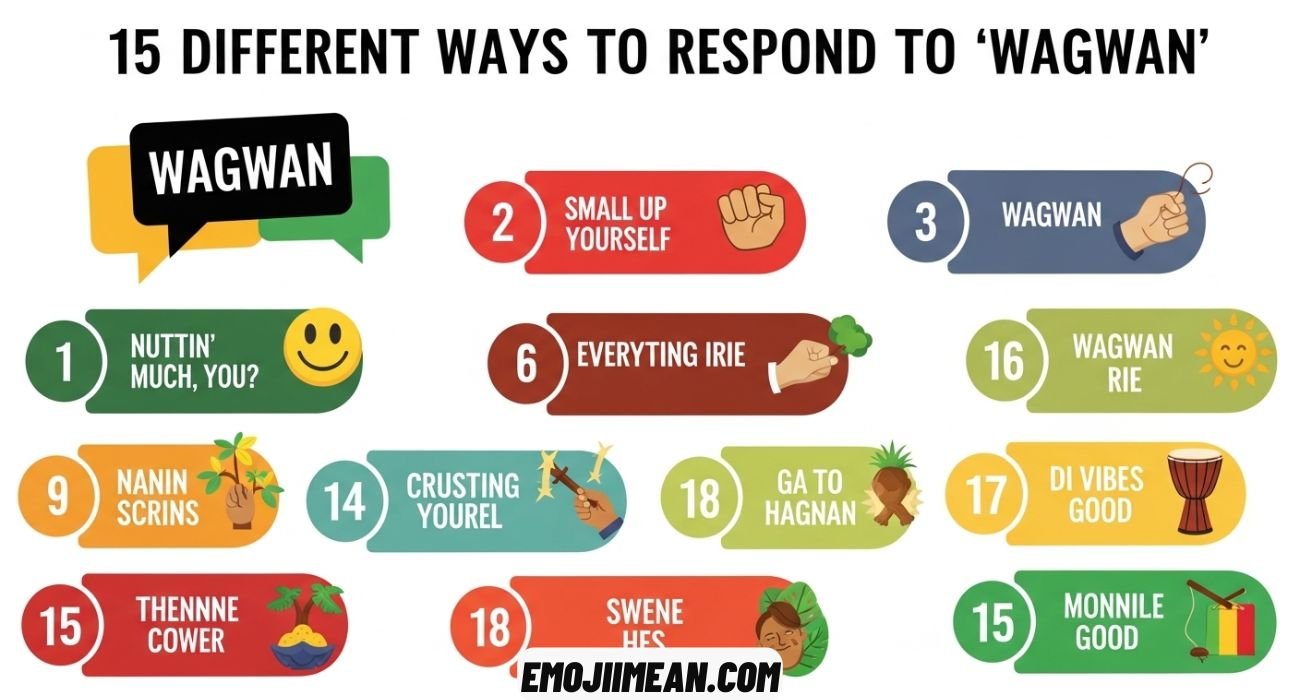
15 Different Ways to Respond to “Wagwan”
To respond to Wagwan means to answer when someone says “Wagwan”. Wagwan is a friendly greeting from Jamaican Patois. It is like saying “What’s going on?” or “How are you?”.
Sometimes people feel unsure when they hear Wagwan. It can happen at school, online, or on the street. Knowing how to reply makes talking easier and more fun.
You can respond to Wagwan in many ways. You can be friendly, short, funny, or polite. Learning this helps you speak confidently and make friends quickly.
What Does “Wagwan” Mean?

Wagwan meaning comes from Jamaican Patois greeting, and it literally translates to “What’s going on?”. It is similar to asking “What’s up?” or “How’s it going?”, but carries a rich cultural and social background. Wagwan is widely used in the UK, especially in cities like London, Birmingham, and Manchester, among youth and urban communities influenced by grime and reggae slang. In the USA, it is often encountered in music, social media, and pop culture, but many Americans may still be unsure about its meaning or appropriate reply.
Linguist Dr. Carolyn Cooper, who studies Jamaican Creole language and cultural slang phrases, explains, “Expressions like ‘wagwan’ are not just casual greetings—they are cultural connectors. They reflect shared identity, community, and familiarity.” Understanding what does wagwan mean is key because replying correctly shows awareness of street slang UK and urban British expressions, which can help you navigate casual conversations naturally and respectfully.
How to Respond to “Wagwan” in Everyday Situations
The way you respond depends heavily on your context, the tone of the greeting, and your relationship with the person. There isn’t one single wagwan reply; there are many, and choosing the right one can show your conversational confidence.
Some responses work best in casual encounters, while others are suitable for professional settings. We will divide the responses into categories so you can choose appropriately.
1. The Classic Friendly Reply
For everyday interactions, a classic friendly reply works well. Saying something like, “I’m good, wagwan with you?” or “All good, my guy. You?” reflects the casual, relaxed nature of British slang greetings. This style of reply mirrors the speaker’s energy, which in social psychology is known as mirroring conversation style, helping to build rapport and make the interaction smoother.
In the USA, a similar concept would be replying to “What’s up?” with “All good, you?”, showing that you are approachable and friendly while respecting the cultural roots of the greeting.
2. Keep It Short and Casual
Sometimes, you don’t need to overthink your reply. Simple, short phrases are ideal in urban slang conversation or fast-paced social settings. Responses like “Safe, bro”, “Bless”, or “Easy, fam” are commonly used in London and other parts of the UK. For a USA audience, these phrases can be adapted to “All good”, “Hey, what’s up?”, or “Chill”.
The key is brevity and natural delivery, which helps maintain a friendly, casual vibe. These are also examples of casual hello phrases and friendly greetings that help you blend in without forcing slang.
3. Add Humour and Personality
Injecting humour into your wagwan reply makes the conversation more memorable and engaging. You can say things like, “Same old drama, just less exciting than Netflix” or “Trying to survive Monday, you know how it is”. Humorous replies work especially well among friends or peers and show personality without appearing forced.
Using humour also taps into polite ways to reply slang, where the tone remains casual but adds a personal touch. Remember, timing is important, and humor should feel natural rather than scripted. In urban communities, this style often helps strengthen bonds through laughter and shared understanding.
4. Professional or Polite Settings
Yes, you might hear “wagwan” in a professional or semi-formal setting, especially in creative industries or workplaces influenced by urban culture. In these situations, it’s best to respond with polite professionalism while acknowledging the greeting. Saying “Doing well, thank you. How about yourself?” or “All good on my end, hope the same for you” shows respect and cultural awareness.
For USA audiences unfamiliar with the phrase, this method balances social etiquette UK with polite business communication. Even though British slang greetings may feel informal, responding appropriately ensures you maintain credibility while being friendly.
5. If You’re Unsure
If you’re ever unsure about how to reply, keeping it simple is the safest approach. You can respond with phrases like “Hey, how’s it going?” or “Good to see you.” These responses acknowledge the greeting without trying to mimic slang you are unfamiliar with. Being authentic is more important than overusing urban British expressions you don’t naturally use.
In fact, asking clarifying questions in a friendly tone can even spark conversation, showing curiosity and openness to cultural slang phrases. This is a subtle way to show conversational confidence without risking awkwardness.
Why Responding Well to “Wagwan” Matters

Responding effectively to wagwan goes beyond knowing the words. It demonstrates cultural awareness, respect for Jamaican Patois greeting, and understanding of street slang UK. Proper replies also improve social interactions and help you connect with people authentically. Mirroring the energy of the greeting, or using humour appropriately, builds trust and relatability.
Studies in social psychology show that mimicking greetings and conversational style increases positive perception and strengthens social bonds. Even in professional contexts, knowing how to respond to wagwan can enhance communication and show cultural competency in diverse settings.
Real-World Examples
Consider the following examples from different people who regularly encounter “wagwan”:
| Name | Age | Context | Typical Reply | Notes |
| Amir | 24 | Student | “Wagwan, fam” | Automatic, casual, friendly |
| Tasha | 29 | Marketing Exec | “Hey, how you doing?” | Polite, professional |
| Marcus | 32 | Musician | “Just dodging emails, you?” | Humorous, engaging |
| Layla | 27 | Blogger | “All good, vibes only. You?” | Casual, social media-friendly |
These examples show that context, tone, and personality matter more than the words themselves. For a USA audience, translating these London greetings into familiar casual phrases like “Hey, what’s up?” or adding humor works equally well, as long as the response feels natural and genuine.
Common Mistakes to Avoid
Even though wagwan is friendly, some replies can feel off. Overly formal replies like “Good afternoon, how do you do?” seem mismatched, while ignoring the greeting entirely can come across as rude. Overusing slang you are not familiar with can also seem forced. Authenticity is key; instead of repeating words mechanically, aim for natural conversation that reflects your personality.
Remember, friendly greetings, casual hello phrases, and humorous replies to greetings are tools, but their effectiveness depends on genuine delivery and reading the context.
Understanding the Roots of “Wagwan”
The phrase “wagwan” comes from Jamaican Patois greeting and literally means “What’s going on?”. It’s used to signal friendliness and warmth, especially in Caribbean communities. Over time, it traveled to the UK, becoming part of urban British expressions and street slang UK. Understanding this helps in grasping the social meaning behind the casual hello.
Knowing wagwan meaning also shows respect for cultural slang phrases. In social interactions, using it correctly reflects conversational confidence and awareness. Misunderstanding it can make replies awkward, so learning the cultural background ensures your wagwan reply feels authentic, not forced, especially for a USA audience encountering this term for the first time.
See Also : Best Reply to WTBI and Its Meaning
Recognizing Casual Greetings in UK Urban Culture
British slang greetings like wagwan are common in London, Birmingham, and Manchester. They’re part of youth and music culture, often linked to grime and reggae slang. These casual greetings create familiarity among peers, signaling that the conversation is friendly rather than formal.
For Americans, understanding casual greetings UK helps in social situations where urban slang conversation appears. Recognizing friendly greetings and polite ways to reply slang shows cultural sensitivity. Responding appropriately allows you to match energy and tone, creating instant connection without seeming out of place in international contexts.
The Art of the Classic Friendly Reply
A simple reply like “I’m good, wagwan with you?” is the classic friendly reply. It mirrors the greeting’s tone, showing that you understand urban British expressions and have conversational confidence. Such replies work well in casual encounters on the street or social events.
This approach also demonstrates mirroring conversation style, making the interaction smooth and relatable. Americans can adapt this by combining familiar phrases with what’s going on slang, creating replies like “All good, how’s it going?”. It keeps the conversation relaxed while respecting the original Jamaican Creole language roots of the greeting.
Quick and Casual Responses for Everyday Situations

Sometimes the best replies are short and casual. Saying “Safe, bro” or “Easy, fam” fits the pace of urban slang conversation in the UK. These quick wagwan replies show comfort and confidence without overthinking.
For a USA audience, this can translate to “All good” or “Hey, what’s up?”, maintaining a relaxed, friendly tone. Using casual hello phrases naturally helps you blend in, while showing awareness of British slang greetings and friendly greetings in urban settings.
Using Humor to Stand Out in Your Replies
Humor is a powerful tool when replying to wagwan. Saying something like “Same old drama, just less exciting than Netflix” creates a light, engaging conversation. Humor works well in casual and social situations, especially with friends who appreciate humorous replies to greetings.
It also strengthens social etiquette UK understanding by keeping the tone positive and relatable. Humor combined with British slang greetings reflects confidence and personality. Even for a USA audience, playful replies allow you to connect naturally while respecting the Jamaican Patois greeting tradition.
Professional and Polite Ways to Respond
Occasionally, you might hear wagwan in a workplace or semi-formal setting. Polite replies like “Doing well, thank you. How about yourself?” maintain professionalism while showing familiarity with urban British expressions.
Using polite ways to reply slang ensures you respect both the greeting and your professional environment. Even if you’re from the USA, balancing cultural slang phrases with professional decorum shows cultural sensitivity. This method demonstrates conversational confidence without compromising respect or tone.
Responding When You’re Unsure
If you’re not confident in using slang, keep your wagwan reply simple. Responses like “Hey, how’s it going?” or “Good to see you” acknowledge the greeting politely and prevent awkwardness.
Being authentic matters more than repeating slang you don’t know. Using clear, friendly language while respecting British slang greetings ensures smooth communication. Even when unsure, showing awareness of urban British expressions and casual greetings UK helps maintain confidence and connection.
Mirroring Conversation Style to Build Rapport
Mirroring the speaker’s tone is key to an effective wagwan reply. Matching energy and casualness makes your response feel natural. Mirroring conversation style is common in urban slang conversation, creating connection quickly.
For USA audiences, learning to mirror energy helps even in unfamiliar slang settings. Combining friendly greetings with humor or casual tone strengthens relationships. Understanding wagwan meaning ensures your mirrored response respects the Jamaican Creole language origins.
Avoiding Common Mistakes in Replies

Some replies to wagwan can feel awkward if mismatched. Overly formal responses like “Good afternoon, how do you do?” clash with street slang UK. Ignoring the greeting entirely can also appear rude.
Using slang you don’t understand may feel forced. Instead, focus on authentic friendly greetings and casual hello phrases. Awareness of British slang greetings and urban British expressions allows you to navigate cultural differences gracefully and maintain conversational confidence.
See Also : What Does WYD Mean and Its Responses
Learning From Real-World Examples
Real people handle wagwan differently depending on context. A student might say “Wagwan, fam”, a professional might use “Hey, how you doing?”, and a musician could respond humorously with “Just dodging emails, you?”.
Studying these examples shows the importance of context, personality, and tone. Americans can adapt by substituting familiar phrases while respecting Jamaican Patois greeting roots. Observing real-world urban slang conversation helps build confidence and improves your wagwan reply skills in everyday interactions.
FAQs
What to say after “Wah Gwan?”
You can reply casually with “I’m good, wagwan with you?” or short phrases like “Safe, bro”.
How do we respond to Wagwan?
Respond naturally by matching the tone—friendly, humorous, or polite—depending on the setting.
What is mi deh yah?
It means “I’m here” or “I’m good” in Jamaican Patois, often used as a casual reply.
What is the slang Wagwan?
Wagwan is Jamaican Patois slang meaning “What’s going on?”, used as a casual friendly greeting.
Conclusion
Knowing how to respond to Wagwan helps you speak confidently with friends and new people. You can use friendly words, short phrases, or small jokes. This shows that you understand British slang greetings and urban British expressions. Practicing these replies makes conversations easier and more fun. You also show respect for the Jamaican Patois greeting and its meaning.
Using the right way to respond to Wagwan builds trust and friendship. You can match the energy of the person who greets you. Simple and polite replies work anywhere, even at school or social events. Learning these phrases improves conversational confidence and makes talking with others enjoyable. Remember, being natural and kind is the most important thing.