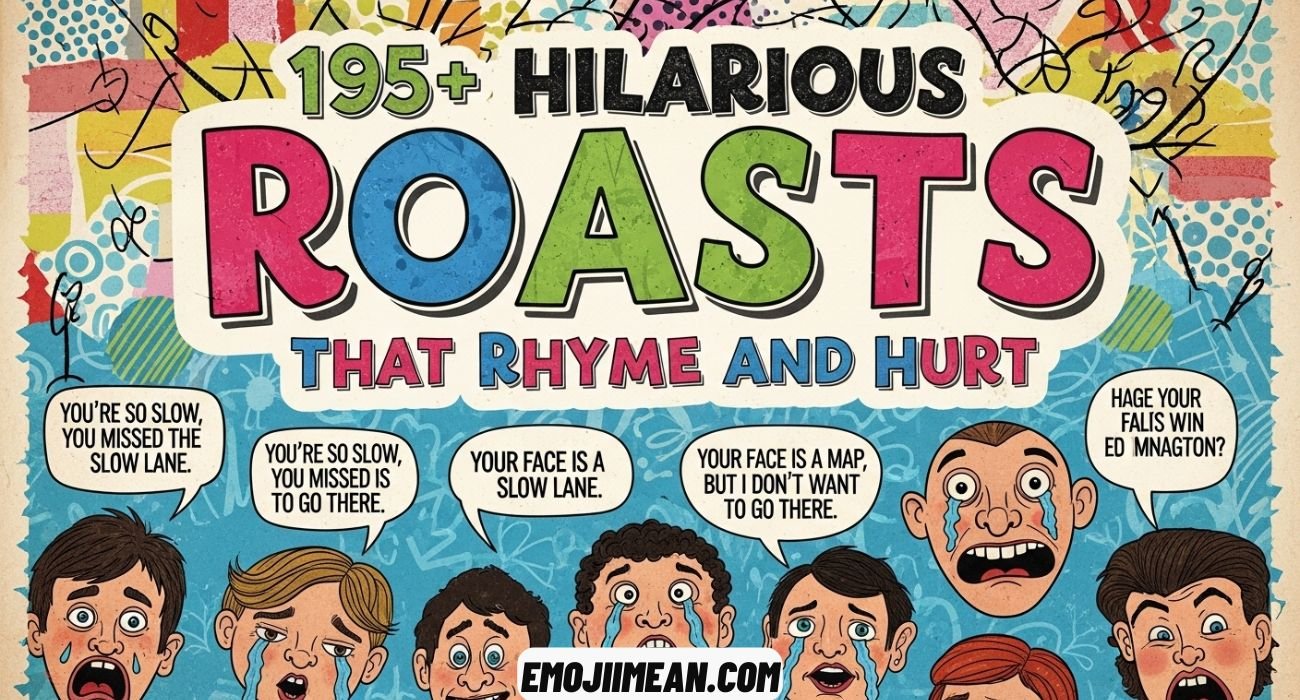
195+ Hilarious Roasts That Rhyme And Hurt
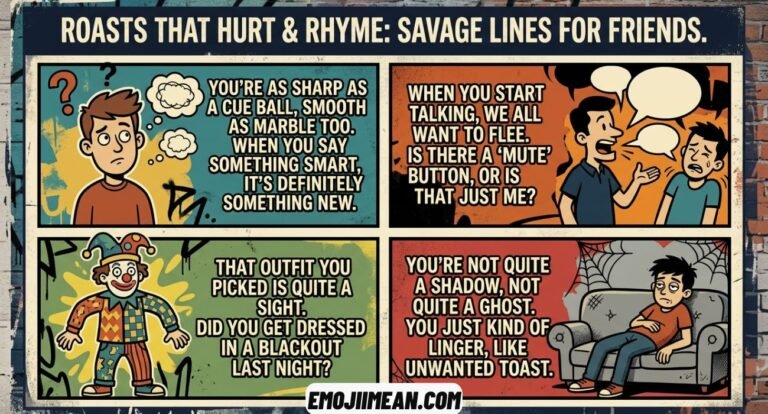
Roasts That Rhyme And Hurt are clever lines that make fun of someone. They use words that rhyme to sound smooth and catchy. These roasts are funny, sharp, and easy to remember. They work in conversations, online chats, and friendly teasing.
Using Roasts That Rhyme And Hurt can make you stand out. A good rhyme grabs attention quickly. People remember it because it sounds smart and fun. You can make friends laugh or show confidence with the right lines.
These roasts are useful in many situations. You can use them with friends, family, or online. They teach timing, humor, and clever comebacks. Learning them helps you be funny, confident, and memorable.
🔥 20 Rhyming Roasts That Actually Hurt (Fan Favourites)

Some roasts just land better than others, especially when they combine clever comebacks with rhythm. The following 20 are favorites among people who enjoy funny roasts that sting just enough without going too far.
“Tall on talk, short on walk,” perfectly captures someone who talks big but delivers nothing. “Loud online, weak in spine” calls out digital bravado versus real-world courage. Quick retorts like “Big debut, no follow-through” or “Flashy claim, empty game” highlight exaggeration or false confidence. Others, like “Crown you wear, thin on flair” or “Bold display, fade away,” are short witty one-liners that work in almost any social setting.
These memorable comebacks are particularly useful in situations where you want to assert dominance while still keeping the interaction playful. Using them with proper timing and delivery ensures maximum effect. A table of examples and context makes it easier to remember and deploy:
| Roast Line | Use Case | Effect |
| Tall on talk, short on walk | Friend bragging | Light teasing |
| Loud online, weak in spine | Online argument | Sarcastic emphasis |
| Flashy claim, empty game | Boastful coworker | Controlled humor |
| Crown you wear, thin on flair | Party or social setting | Quick clapback |
| Bold display, fade away | Competitive situation | Confidence framing |
Playful Rhyming Roasts (Light Banter)
Not all roasts need to hit hard. Playful banter is about teasing lightly while still being funny. Light-hearted jokes in the form of rhymes can make conversations more engaging. Lines like “You tried to roast, barely a toast” or “Swing so wide, missed your stride” are excellent examples of friendly roast lines that make people laugh without hurting feelings.
Playful rhymes are perfect for online banter among friends, family chats, or casual interactions. The key is to mix humor in conversation with controlled wordplay so the joke feels natural. Timing is critical—pause slightly before the punchline for maximum effect. Rhyming here doubles the impact because pattern recognition in rhymes makes it stick in the listener’s mind.
Savage Rhyming Roasts (Hard Hitters)
For situations where you need a sharp comeback or want to assert dominance with verbal sparring, savage roasts are ideal. These lines are witty, cutting, and leave an impression. Examples include “Crown you claim, hollow fame,” or “Flex so loud, skills not proud.” Each line is a mix of quick retorts and rhythmic insults designed to make the speaker pause.
Savage rhymes are best for friends who understand your sense of humor or for playful competition. They combine punchlines, verbal jousting, and controlled humor to ensure you land your roast with authority. They can be bold and impactful without being genuinely mean, allowing you to show social confidence.
Confident Rhyming Comebacks (Controlled Energy)

Sometimes, the roast isn’t just about humor—it’s about demonstrating control and confidence. Confident rhyming comebacks like “You cast doubt, I sort it out” or “You push the line, I redefine” are structured to convey authority while still being witty. These lines are perfect for situations requiring professional comebacks or asserting presence in a social dynamic.
The power of these comebacks lies in their timing and delivery. Pausing slightly before the punchline or adding a calm, measured tone signals mastery over the interaction. When used correctly, these humorous clapbacks help establish social confidence, making you appear unshakable even in tense situations.
Sarcastic Rhyming Roasts (Dry Wit)
Sarcastic replies rely on clever wordplay and subtlety rather than outright insults. Lines like “Groundbreaking view, brand new to you” or “Epic advice, said it twice” leverage irony and dry humor. The goal is to make people realize the absurdity of their behavior while delivering a memorable comeback.
Dry wit works particularly well in professional or casual conversations where you want to avoid aggression. Using playful teasing and light-hearted jokes, sarcastic rhymes create humor without escalating tension. Timing is crucial—if delivered too fast, the sarcasm may be lost; too slow, and it feels forced.
Professional Rhyming Replies (Work Safe)
At work, humor needs to be polite, constructive, and workplace-safe. Professional comebacks like “Let data lead before we proceed” or “Strategy first, risk reversed” combine controlled wordplay with practical advice. These rhymes maintain sharpness while ensuring no one is offended.
In meetings, emails, or online banter, these lines allow you to assert intelligence and wit. Quick clapbacks can defuse tension, demonstrate confidence framing, and maintain professionalism. Using rhymes in work communication also improves memorability, helping your ideas stick without crossing boundaries.
Flirty Rhyming Banter (If It Fits)
Sometimes, rhymes aren’t just for roasting—they can also charm. Flirty rhymes like “You flash that smile, worth the while” or “Move so smooth, shifts my groove” combine flirty wordplay with subtle compliments. When interest is mutual, these lines work as humorous clapbacks that add playfulness to romantic or friendly interactions.
Flirty banter works best when paired with controlled humor. The key is to be confident but not overbearing. By combining rhythmic insults with charm, you create engaging interactions that make people laugh and feel noticed.
See Also : 210+ Good Roasts That Hurt Badly – Savage, Clever & Brutal Comebacks
Why Rhyming Roasts Hit Harder
Rhymes hit harder than normal insults because of how our brains process rhythm. Pattern recognition in rhymes triggers memory, making the comeback feel sharp and clever. Using witty one-liners demonstrates social confidence and signals control. Humor also deflects tension, turning a potential argument into an engaging interaction.
In social settings, a well-delivered rhythmic insult elevates your presence. People remember lines that flow smoothly, which is why verbal jousting and banter techniques often rely on rhyme for maximum impact. Timing and delivery further amplify the effect, turning simple friendly roast lines into unforgettable moments.
When to Use Them
Knowing the right moment for rhyming roasts is essential. With friends, playful or sarcastic rhymes work best. At work, stick to professional comebacks and workplace-safe rhymes. During dating or flirty interactions, flirty wordplay is ideal but only when interest is mutual. Online, it’s essential to consider tone carefully, as humor in conversation can easily be misunderstood.
Using controlled wordplay at the right time maximizes the impact of quick retorts, ensures social confidence, and keeps interactions fun and engaging.
How to Deliver Them
Delivery makes or breaks a roast. Calm, slightly amused tone works best for most humorous clapbacks. Pause just before the punchline, and maintain confidence framing to show control. In verbal sparring, timing and delivery create an impression of effortless mastery. Remember, it’s not just what you say; it’s how you say it. Quick, rhythmic lines, delivered with subtle pauses, are the secret behind memorable rhyming roasts.
Quick Examples in Action
Imagine these real-life situations: A friend says, “Weak take.” You respond with “Strong reaction, weak traction.” At work, a colleague says, “That won’t work,” and you reply, “Let’s test the ground before we stand.” On a date, they tease, “You’re trouble,” and you smile, “Only the fun kind hope you don’t mind.”
Even siblings can get a taste: “You’re slow,” you fire back, “Slow and steady always ready.” These examples demonstrate controlled humor, friendly roast lines, and the power of quick clapbacks in everyday situations.
The Art of Rhyming Roasts

Rhyming roasts are more than just funny lines—they are a form of controlled wordplay that combines humor, rhythm, and timing. When delivered well, they become memorable comebacks that stick in people’s minds. Using rhymes creates pattern recognition in rhymes, which makes your witty lines feel polished and intentional, elevating your social confidence in any interaction.
Mastering rhyming roasts takes practice. You need to understand timing and delivery, know your audience, and balance playful teasing with sharp humor. Whether in online banter or face-to-face verbal sparring, rhyming gives you an advantage, making your quick retorts feel natural while maintaining authority. A good roast is as much about style as content.
Why Rhymes Make Roasts Hit Harder
Our brains are wired to notice patterns, which is why rhyming roasts feel sharper than regular insults. The rhythm enhances humor in conversation and ensures that your lines are easily remembered. Using witty one-liners or humorous clapbacks in rhyme increases their impact, making the roast both playful and cutting without seeming mean.
Rhymes also improve confidence framing. Delivering a line with rhythm demonstrates control and social confidence, signaling mastery over the interaction. In verbal jousting, timing is everything. A well-placed rhyme can turn a casual chat into a memorable moment, making even friendly roast lines feel sharper and more sophisticated.
Playful Banter for Everyday Situations
Not every roast should hurt. Playful banter is all about teasing lightly while keeping interactions fun. Lines like “You aimed high, clipped the sky” or “Swing so wide, missed your stride” use rhythmic insults and light-hearted jokes to entertain without offending. These types of comebacks are ideal for online banter, friends’ gatherings, or casual family chats.
Even small quick clapbacks can enhance conversations when used correctly. By mastering banter techniques, you can make everyday moments more engaging. Using friendly roast lines encourages laughter, builds rapport, and makes your presence in any social setting more enjoyable while honing your controlled humor and playful teasing skills.
Savage Roasts for Bold Personalities

Savage roasts are for moments when humor meets sharpness. Lines like “Crown you claim, hollow fame” or “Flex so loud, skills not proud” are perfect sharp comebacks for verbal sparring or competitive settings. These roasts land hard because they mix quick retorts with pattern recognition in rhymes, making them feel smart and memorable.
Despite their edge, savage rhymes must be delivered with controlled humor. They are most effective among friends or in playful rivalries where everyone understands the tone. Knowing how to balance boldness with respect helps maintain social confidence while ensuring the line hits exactly as intended, making your humor both powerful and safe.
Sarcastic Rhyming Replies
Sarcastic replies use irony and wit to make a point without being aggressive. Lines like “Groundbreaking view, brand new to you” turn absurdity into humor using clever comebacks and humorous clapbacks. Sarcasm in rhymes highlights intelligence while providing playful teasing, ensuring the roast is funny, clever, and memorable.
These roasts are perfect for casual conversations or online banter. The key is timing and delivery—too fast, and the sarcasm is lost; too slow, and it feels forced. Mastering sarcastic rhymes enhances your social confidence and allows you to participate in verbal exchanges with charm, quick retorts, and polished wordplay.
Confident Rhyming Comebacks
Confidence makes a roast unforgettable. Confident rhyming comebacks like “You test my pace, I set the base” combine humor with authority. These lines show social confidence and mastery of verbal jousting, letting you control interactions with ease. Confidence and timing and delivery are key for making these comebacks land perfectly.
When used properly, these rhymes also boost personal charisma. A calm, deliberate tone paired with controlled wordplay signals authority and wit. Such lines work in any environment, from casual conversations to debates, providing a balance of sharp comebacks, playful teasing, and memorable comebacks that people won’t soon forget.
Flirty Rhyming Banter
Flirting with rhymes adds charm to humor. Flirty rhymes like “You flash that smile, worth the while” combine flirty wordplay with humor to make interactions more engaging. When interest is mutual, playful rhymes enhance connections and create moments of laughter, adding confidence framing and social confidence to your romantic exchanges.
Flirty banter works best when it feels effortless. Paired with timing and delivery, these lines are memorable without being overbearing. They allow you to engage in verbal sparring that is fun and light-hearted, mixing playful teasing with charm, making you both witty and appealing in your approach.
Professional Rhyming Replies

Not all rhymes are for casual fun. Professional comebacks like “Let data lead before we proceed” or “Strategy first, risk reversed” show intelligence and wit while remaining workplace-safe comebacks. These lines combine controlled wordplay, quick retorts, and humor in conversation to maintain authority and professionalism.
In meetings or emails, rhyming adds personality without crossing boundaries. Timing and delivery remain crucial to ensure the line lands as intended. Using verbal jousting techniques in a controlled setting can make presentations, debates, or team discussions more engaging while showcasing social confidence and smart wordplay.
See Also : Skull Emoji Mean and Best Responses: Your Complete Guide
Quick Retorts for Any Situation
Sometimes the situation calls for quick retorts rather than lengthy roasts. A well-timed, rhythmic line can instantly change the tone of a conversation. Using memorable comebacks with rhyme ensures the line is both funny and sharp. Rhythmic insults and witty one-liners give you the edge in casual or competitive conversations, online or offline.
These quick lines are effective because they rely on pattern recognition in rhymes, making them easy to recall. Mastering banter techniques, playful teasing, and controlled humor allows you to respond instantly in social or professional contexts. Over time, using friendly roast lines as humorous clapbacks becomes a natural and confident skill.
Timing, Delivery, and Social Confidence

A roast’s success is more than the words—it’s about timing and delivery. Proper pauses, tone, and eye contact can make a simple rhyming roast land perfectly. Lines that are clever but poorly delivered often fail. Combining quick clapbacks with strong confidence framing ensures your humor is effective and memorable.
Social confidence enhances every rhyme. Mastering controlled wordplay, understanding social dynamics, and practicing verbal sparring improves your ability to interact seamlessly. Whether delivering sharp comebacks in playful banter or professional comebacks in work settings, confident delivery turns every funny roast into a moment people remember and admire.
FAQs
What Words Rhyme with Hurt?
Words that rhyme with hurt include: flirt, shirt, skirt, spurt, dirt.
What Word Rhymes with Roast?
Words that rhyme with roast include: boast, coast, most, ghost, toast.
What Rhymes with Rude?
Words that rhyme with rude include: dude, crude, prude, mood, food.
What Rhymes with Funny?
Words that rhyme with funny include: money, honey, bunny, sunny, runny.
Conclusion
Roasts That Rhyme And Hurt are powerful because they mix humor with rhythm. When you use them, people remember your words easily. They show confidence and make conversations fun. You can use these rhymes with friends, at school, or online. Timing and delivery help them land perfectly. Using playful teasing and clever comebacks makes every interaction lively and enjoyable.Learning Roasts That Rhyme And Hurt helps you speak clearly and smartly. You can practice short lines to improve your rhythm and humor. They teach you control, confidence, and how to be funny without being mean. These rhymes are safe to use in many situations. Using them correctly makes you creative, sharp, and memorable in every conversation.